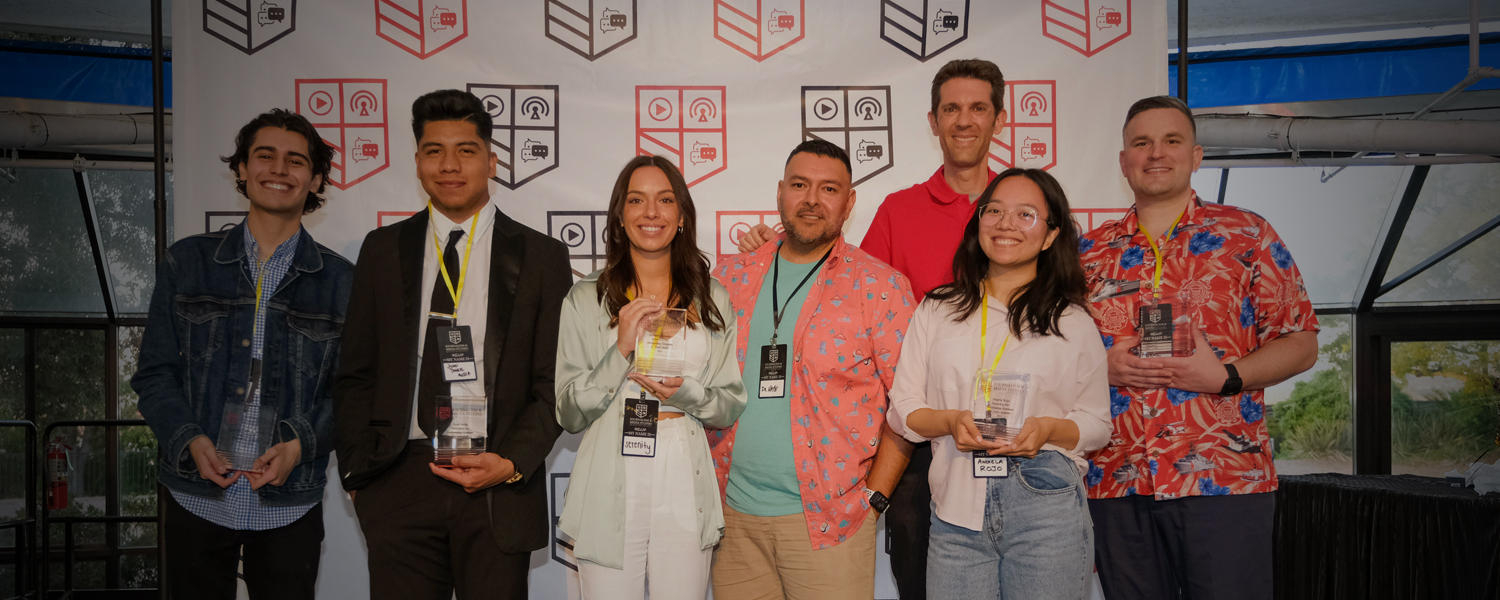
Dr. Schmitz Weiss on new approaches to the media industry
JMS professor Amy Schmitz Weiss discusses her recent research publication concerning cognitive mapping and its application to the modern-day journalism industry.
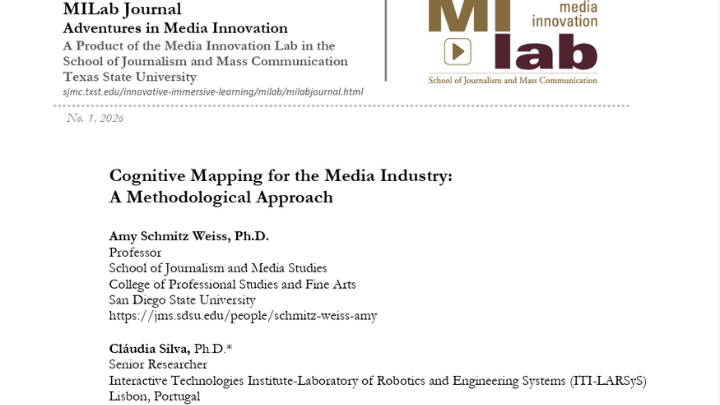
In a modern media landscape where news is abundant and constantly changing, journalists face growing pressure to bridge the gap between their work and how audiences perceive it.
In a recently published study, Dr. Amy Schmitz Weiss, a journalism professor at San Diego State University, analyzes that relationship in collaboration with co-author Dr. Claudia Silva, a senior researcher in Ispra, Italy. The study, “Cognitive Mapping for the Media Industry: A Methodological Approach,” explores how cognitive maps can enhance the relevance and precision of contemporary news coverage.
“The study looks at how we can understand how people think about the places and spaces around them, and how much that has an impact on what news they seek out and what they want,” Schmitz Weiss said. “It’s an approach that helps newsrooms and journalists have a better understanding of how to get into that mindset of the audience, versus just looking at metrics in a report.”
The authors emphasize how visual, representational cognitive maps illustrate spatial and environmental relationships, offering journalists insight into audience characteristics and preferences.
Schmitz Weiss said this understanding has become increasingly essential in today’s media environment. While journalists have long relied on “imagined audiences,” or mental assumptions about who their readers are, to guide reporting decisions, news organizations now have opportunities to connect with communities in more personal and intentional ways.
Amid what she described as a “significant decrease in the number of people who are consuming news and trust news organizations,” Schmitz Weiss said journalists must “get on the ground,” engage directly with audiences and shift reporting toward a conversational, two-way exchange.
The framework extends beyond professional journalists. For students studying journalism and media studies, the publication offers perspectives that may shape future career paths.
“I think for students, it is a really good approach to think through their future in the industry, and how they can pioneer a different path of what it means to be a journalist engaging with the community,” Schmitz Weiss said.
Schmitz Weiss also offered mentorship advice for students seeking to enter diverse media ecosystems.
“Soak everything in,” Schmitz Weiss said. “[Embrace] technology, too. Before [you] go out into a newsroom in the future, really see how [you] can establish [your] voice in this space.”
Beyond its impact on readers, the research also prompted reflection for Schmitz Weiss.
“I think from start to finish, we were very excited about the idea because we know that there have been different iterations of how people have approached this in different studies in the past, but not in this exact fashion and from this particular discipline,” she said. “We were really excited to be able to have an opportunity to dive deeper and bring this aspect from another discipline into journalism studies.”
Schmitz Weiss said the project has evolved over several years and expressed enthusiasm about its official publication.
Looking ahead, she hopes the research will encourage reporters, readers and newsrooms to reconsider and potentially reimagine how they navigate news and newsworthiness in the modern media landscape.
Next Story

Paulina Castellanos Wade builds bilingual journalism path with NBC7 and Telemundo20 internship
Paulina Castellanos Wade leveraged her international background and initiative to secure an internship at NBC7 and Telemundo20, where she bridges languages, disciplines and communities through globally informed journalism.