JMS professor Lourdes Cueva Chacón examines inequality and press freedom in new Knight Center book
Dr. Cueva Chacón's work highlights gender disparities and regional precarity within Peru’s media landscape.
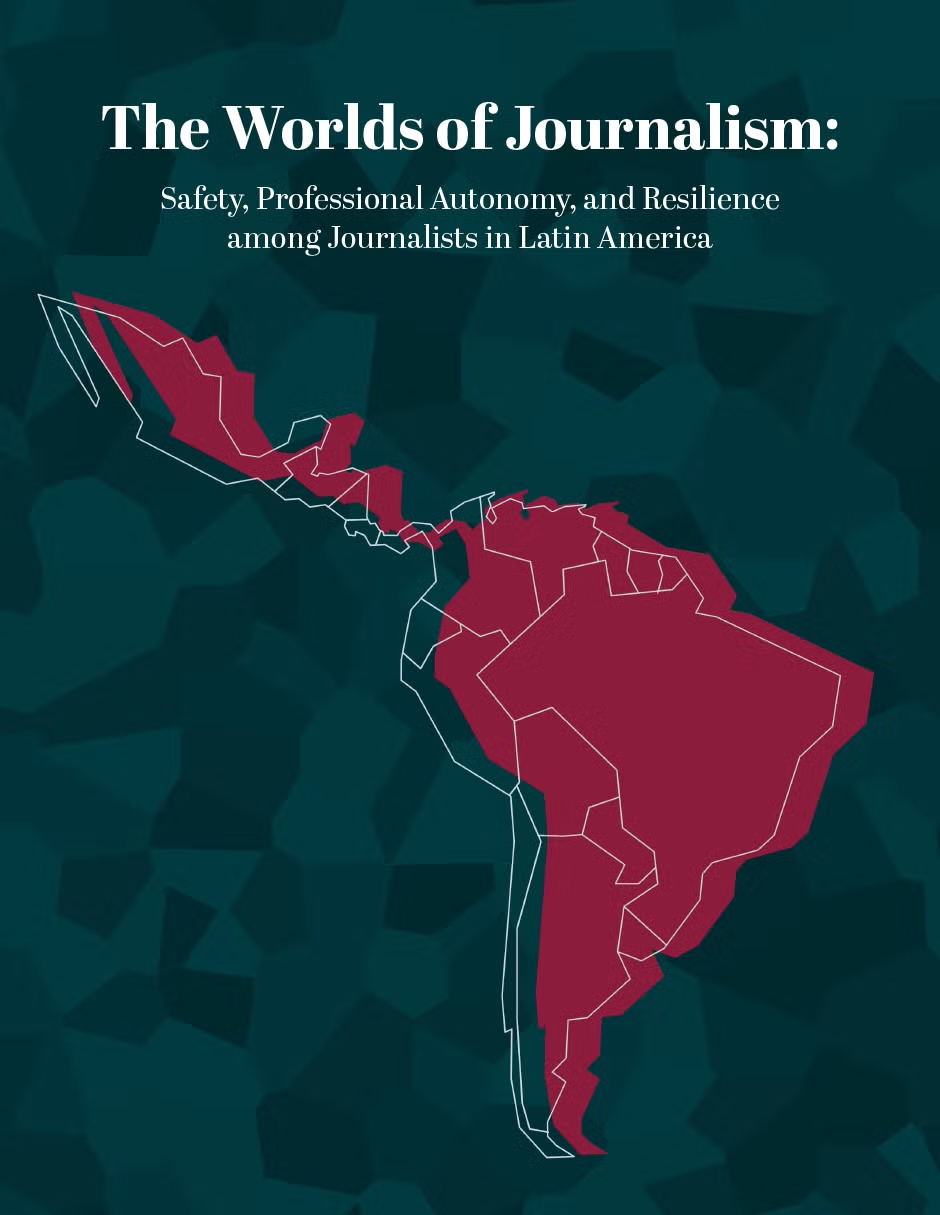
Across continents, journalists are seeking to balance professional reporting values with evolving social and political climates. The exact nature of these conditions, however, varies significantly by region, a theme explored in the recently published Knight Center book, “The Worlds of Journalism: Safety, Professional Autonomy, and Resilience among Journalists in Latin America.”
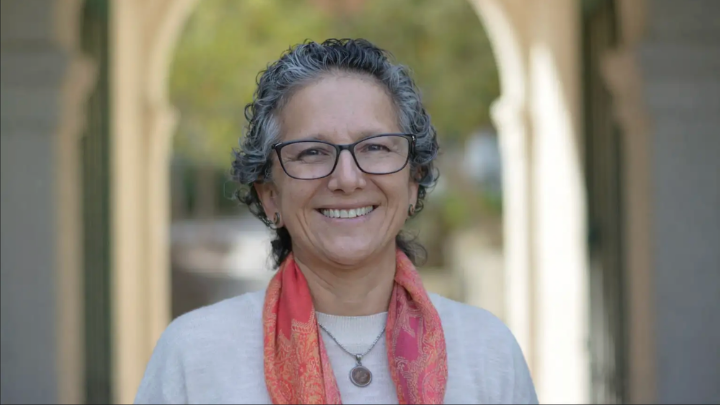
“[The Knight Center's] Peruvian team invited me to help support them with the analysis of the data and the writing of the manuscript for this specific project,” Cueva Chacón said.
After analyzing surveys from more than 335 journalists in Peru, Cueva Chacón and her colleagues identified distinct patterns surrounding gender representation, institutional support and regional differences throughout the country.
Chief among these findings was the disproportionate participation of women in the general field.
“In most parts of the world, women are roughly 50% of the population. In Peru, the women who are in journalism is less than 30%,” she said. “So, there is a problem of representation.”
A similar imbalance unveiled itself in overall workplace dynamics, with women reporting significantly lower levels of support from their managers and organizations than that received by their male counterparts.
Comparable disparities are prevalent in areas beyond gender, too, appearing across regional contexts.
“Peru is a very centralized country,” Cueva Chacón said. “What the other reporters outside Lima said is that they have more precarity in their job, so they are either earning less money or they don’t have job security. It is a statistically significant difference compared to Lima.”
Cueva Chacón continued to emphasize that it is a particularly vital time for young media scholars to develop their awareness of these realities. As organized crime expands, migration patterns shift and authoritarianism builds momentum in South America, democratic ideals undergo increasing strain and instability.
“These are the moments,” she said. “This is the time when we need a strong press that is able to visualize issues, report crime [and] work on large investigative projects to uncover corruption within governments.”
In practice, journalists should endeavor to prioritize education surrounding political literacy, Cueva Chacon said. While the majority of reporters cite social commentary as their foremost responsibility, it is insufficient for their influence to remain exclusively in the civic sphere.
Her urgency is further amplified by spreading violence against journalists.
“The murdering of journalists in Mexico and some Central American countries is [a phenomenon] now happening in South America,” Cueva Chacón said. “We can see that those [risks] are expanding and impacting the rest of the countries, and that is worrisome.”
Nevertheless, commitment to traditional journalistic values persists, and Cueva Chacón expressed confidence in those reporters “still willing to raise their voices” amid such vulnerable, uncertain times.
She also noted that the book’s trilingual format enhances its overall relevance and impact on audiences.
“I don’t think there has been something done like this in the past,” Cueva Chacón said. “It is a very large effort and a very consistent effort to put together the main outcomes of the research and do it in Spanish, English and Portuguese. I have to acknowledge the leadership by the Knight Center for Journalism in the Americas and the University of Miami.”
Despite the myriad of challenges facing the journalism industry today, Cueva Chacón remains hopeful that with sustained research, education and advocacy, communities will move to not only better represent, but successfully support reporters around the world.
Next Story
Dr. Schmitz Weiss on new approaches to the media industry
JMS professor Amy Schmitz Weiss discusses her recent research publication concerning cognitive mapping and its application to the modern-day journalism industry.